From Gutenberg to Gutenborg
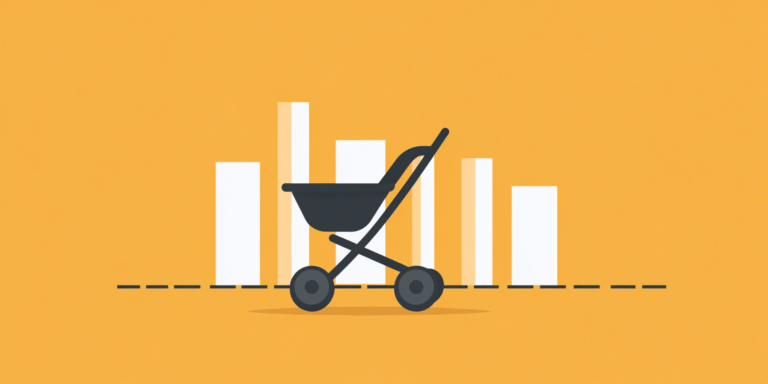
The Empty Nursery: Why Fewer Women Want Children – And Why Governments are Panicking
In March 2025, Donald Trump announced a $5,000 “baby bonus” and a Presidential Medal of Motherhood, a bizarrely grand gesture to reverse America’s falling birth rate. “America needs more babies,” he declared. He is not alone in his concern. From China’s abandoned one-child policy to Hungary’s tax breaks for large families, a growing number of governments are sounding the alarm about what used to be a private choice: whether- or whether not- to have children. The underlying trend is stark …
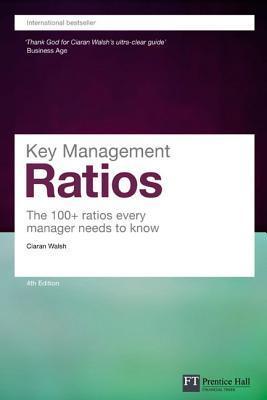
Balance Sheets ~ visualised
Ciaran Walsh invites us to see the balance sheet not as a dry list of figures, but as a living snapshot of a business’s story and strategy. In his teaching and writing, he reframes it as a tool for asking critical questions—not just “What does the company own?” but “Why does it own it?” and “How is it financing its ambitions?” At its core, Walsh conceptualizes the balance sheet as a map of business decisions. The left side—assets—reflects what the …
Smart Notes
In a world overflowing with information, the ability to make connections is more valuable than simply collecting facts. That’s where the Zettelkasten method—a deceptively simple system of smart note-taking—becomes transformative. At its core, it’s not about storing knowledge, but thinking with it. Each “zettel” (slip) holds a single idea, written in your own words and linked to related notes. Over time, these fragments form a living web of insights, where new thoughts emerge not through linear outlines but through serendipitous …
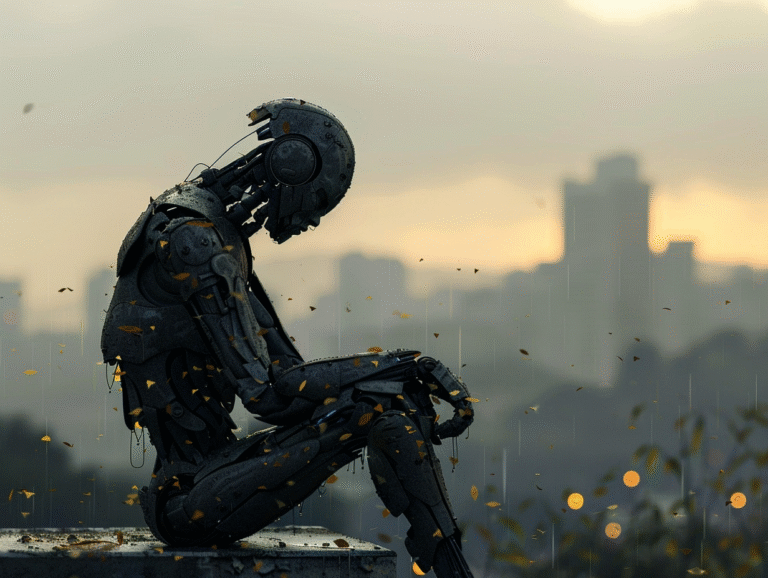
AI will destabalise scoiety
The rise of AI is not just a technological revolution—it’s a social rupture in slow motion. With every leap in capability, from generative language models to autonomous decision-making systems, we inch closer to a world where traditional anchors of stability—jobs, trust, identity, and power—begin to shift, fracture, or disappear. One major risk is economic dislocation. As AI automates not just manual labor but skilled cognitive work, entire sectors may face redundancy. This isn’t just about unemployment—it’s about meaning, status, and …

Continuous v Discrete Distributions
Probability distributions are the backbone of statistical thinking, but not all distributions are created equal. The key distinction? Whether they describe outcomes that are discrete or continuous. A discrete probability distribution models outcomes that are countable—like the roll of a die, the number of cars sold in a day, or the count of customer complaints. You can list the possible values: 0, 1, 2, 3… and assign a probability to each. The probabilities must add up to 1, and you …

Monte Carlo Simulation
In a world full of unpredictability, Monte Carlo simulation offers a powerful way to make informed decisions. Instead of relying on single-point estimates, this technique uses random sampling to simulate a range of possible outcomes. Whether you’re a project manager estimating timelines, a financial analyst assessing portfolio risk, or a policymaker navigating climate scenarios, Monte Carlo helps you model uncertainty explicitly—turning vagueness into something you can reason with. One of its greatest strengths is accessibility. You don’t need to be …
Baltic Risks
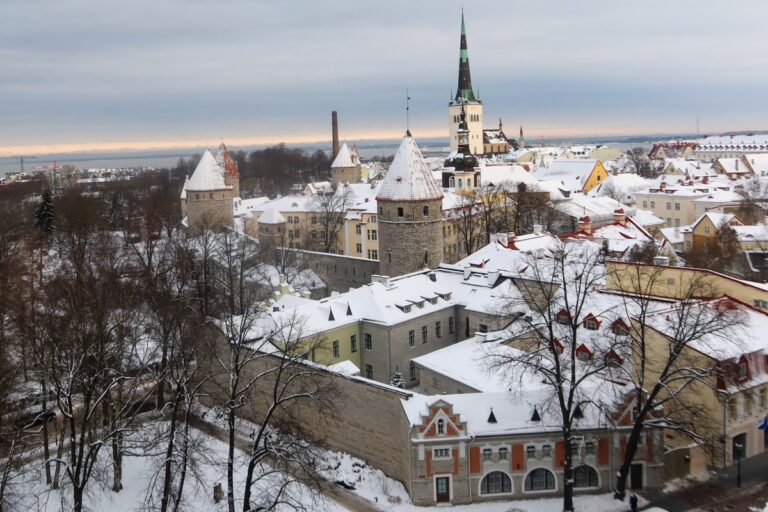
The Baltic states—Estonia, Latvia, and Lithuania—are once again a focal point of European geopolitical tension. Nestled between Russia and the NATO alliance, these countries face a uniquely precarious position. Since Russia’s invasion of Ukraine, the Baltics have stepped up military readiness, hosted large-scale NATO exercises, and strengthened civil resilience programs. Yet the risks remain acute, shaped by geography, history, and Moscow’s persistent use of hybrid tactics. The most immediate concerns are not of tanks crossing borders, but of gray-zone threats: …
Writing is Thinking. Thinking is Writing
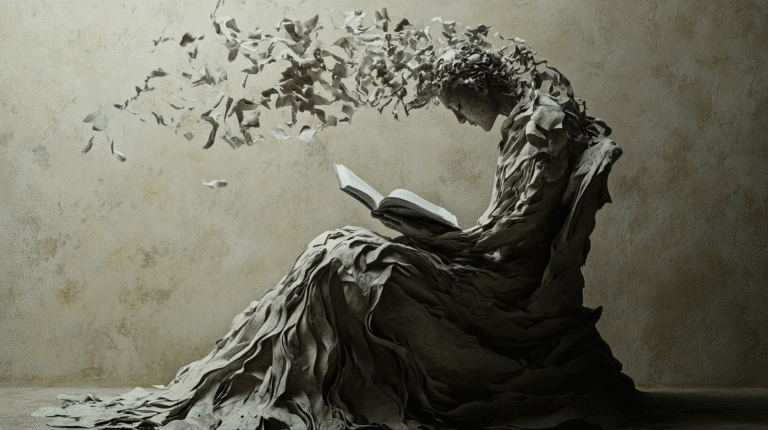
For a long time, I saw writing as the thing you do after you’ve figured something out. You’d think your thoughts through, get clarity, and then set them down in neat, final form. But lately, I’ve come to see it the other way around. Writing isn’t the product of thinking — it is thinking. The act of putting words on the page forces you to pin down slippery intuitions, to follow a line of reasoning to its end, to notice …
Longer Articles
- Geopolitics
- Trump
- China
- Baltics
- Catastrophic & Existential Risk
- AI
- Social Impact
- Generative AI
- Writing & Thinking
- Zettlekasten
- Cognitive Bias
- Business
- Combined SWOT & PESTLE
- Math & Modelling Skills
- Monte Carlo Simulation
- Probability Distributions